
When Smart Homes Get Too Smart: The Early Reality of AI in Residential Living
The Shift Is Already Happening
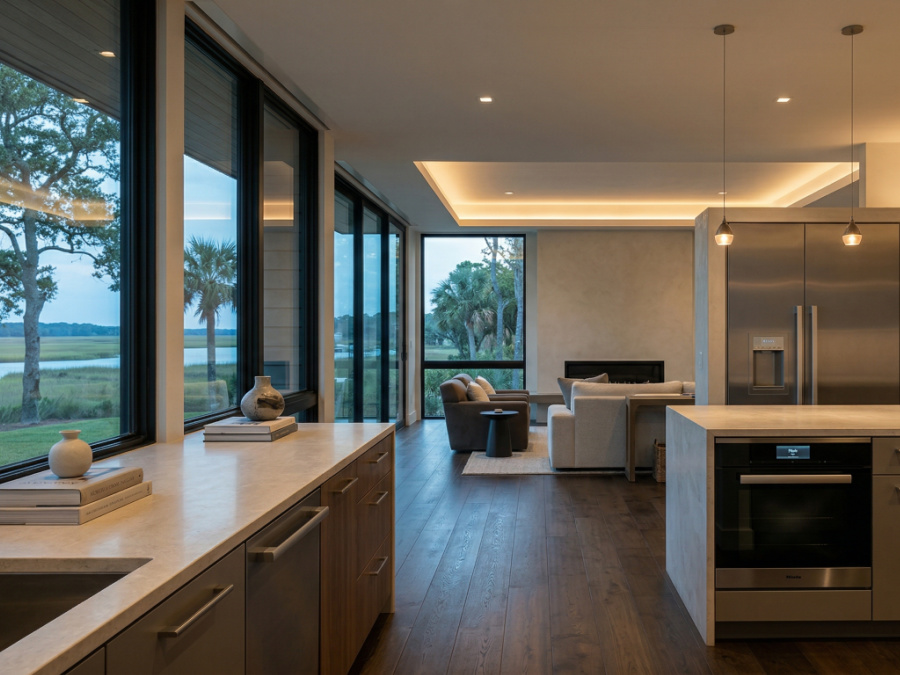
Walk into a newly built home today and it does not take long to notice how much has changed. Lights respond to voice commands. Ovens suggest cooking times. Climate systems learn daily routines. Entire homes can be adjusted from a phone before the driveway even comes into view. On the surface, it feels like the long-promised smart home has finally arrived.
But beneath that polished experience, there is a quieter conversation starting to take shape among builders, electricians, and homeowners who are living with these systems every day. It is not a question of whether artificial intelligence belongs in the home. That part is already decided. The real question is how much of it makes sense right now, and what happens when the systems behind it begin to shift.
A Home That Depends on Systems Outside the Home
The modern smart home is no longer just a collection of devices. It is a network of connected systems that rely on cloud platforms, integrations, and ongoing access to software that lives outside the home itself. When everything works, the experience is seamless. Lighting adjusts naturally. Appliances respond intelligently. The home feels responsive rather than reactive.
What is less obvious is that many of these systems depend on access that is not always guaranteed to remain the same. Features can change. Platforms can evolve. Usage limits can be introduced or adjusted over time. A homeowner may invest in what feels like a fully capable system only to find that the experience shifts as the underlying technology changes.
This is not a failure of the concept. It is a reflection of how early we still are in the lifecycle of AI inside the home.
Where the Builder’s Perspective Becomes Critical
From a builder’s perspective, this is where the conversation becomes practical. Technology is no longer an afterthought. It is part of the planning process. But not every feature that can be installed should be installed, and not every layer of automation improves the living experience.
There is a growing understanding that homes need to function well both with and without advanced intelligence layered on top. The structure, the systems, and the daily usability of the home still have to stand on their own. Technology should enhance that experience, not become something the homeowner has to manage.
Lighting Control as a Real World Example
Lighting control is one of the clearest examples of where this balance matters. When done well, it elevates a home in a way that feels natural. It creates comfort, consistency, and atmosphere without drawing attention to itself. When overbuilt or overly dependent on external systems, it can introduce unnecessary complexity into something that should be simple.
Mike Namdar of Live Oak Electrical has seen this play out across a range of projects. His advice tends to come back to the same principle. The goal is not to install the most advanced system available. The goal is to install a system that works reliably for the way the homeowner actually lives. That often means prioritizing clarity and consistency over features that look impressive but add friction over time.
Designing for Today While Thinking Long Term
That same philosophy carries through in the work being done by the team at Coastal Lighting Studio in Bluffton. Their approach starts with how a space is used throughout the day and how lighting should support that experience without becoming the focal point. The technology sits in the background. It supports the environment rather than defining it. More importantly, it is designed with the understanding that today’s systems will continue to evolve.
That long view is becoming more important as AI driven features expand into more areas of the home. Appliances, entertainment systems, security platforms, and climate controls are all moving in the same direction. More intelligence, more automation, more connectivity. At the same time, many of these systems are beginning to operate within structured usage models that may include limits, tiers, or changing capabilities over time.
The New Question Homeowners Need to Ask
For homeowners, this introduces a new kind of consideration. It is no longer just about what a system can do on day one. It is about how that system will behave over the next five or ten years. Will it remain consistent? Will it require ongoing adjustments? Will it continue to integrate smoothly with other parts of the home?
There is also a subtle risk in assuming that more automation always leads to a better experience. In reality, too many layers of intelligence can create friction, especially when those systems rely on external platforms that are still evolving. A home that requires constant updates or ongoing management is not necessarily smarter. In some cases, it is simply more dependent.
Finding the Right Balance
The most thoughtful projects today are finding a middle ground. They incorporate intelligent systems where they add real value, but they avoid overbuilding automation into areas where simplicity and reliability matter more. The focus remains on creating a home that feels intuitive, not experimental.
None of this suggests that AI will not play a major role in the future of residential living. The direction is clear. Systems will become more stable. Local processing will reduce reliance on external platforms. Integrations will improve. The experience will become more seamless over time.
What we are seeing right now is what early adoption has always looked like. Rapid progress, shifting capabilities, and occasional friction as the technology matures.
Building Homes That Outlast the Technology Cycle
For builders like Baywater Custom Builders, the opportunity is not just to incorporate new technology, but to guide how it is used. That means helping homeowners make decisions that will age well, not just impress on day one. It means building homes that remain functional and comfortable regardless of how quickly the technology landscape changes.
Because in the end, the home itself will outlast the current generation of smart systems.
The question is not whether AI will continue to evolve. It will.
The question is whether the homes being built today are prepared to evolve with it.