
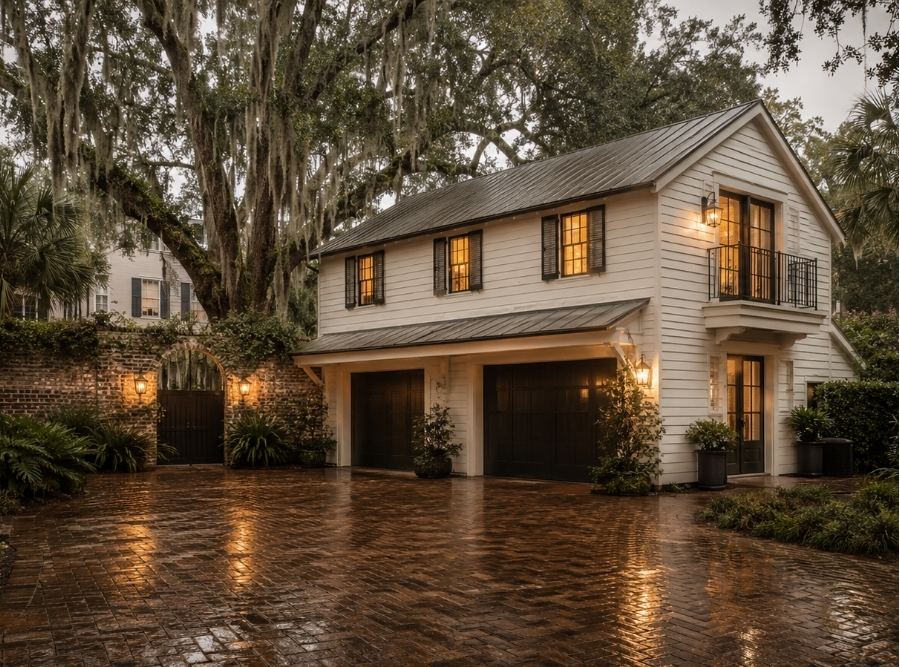
How Long Does It Take to Get an ADU Permit in Savannah, GA?
Quick Answer:
In Savannah, GA, an ADU permit can take anywhere from roughly 6 weeks to 6+ months depending on zoning requirements, historic district review, floodplain conditions, drainage coordination, and how complete the plans are when submitted.
In general:
- Simple ADUs on straightforward lots may move through review in approximately 4–8 weeks
- Projects involving historic review, drainage complications, or marsh-adjacent conditions commonly take 3–6 months
- Complex carriage houses, garage apartment conversions, or projects requiring redesigns and resubmittals can extend beyond 6 months
Savannah’s permitting process is often shaped more by the property conditions, overlays, and review coordination than by the size of the structure itself.
Last verified: May 2026. Savannah permitting timelines, review procedures, and overlay requirements can change over time. Homeowners should confirm current review expectations directly with Savannah’s Development Services Department and Planning & Urban Design Department before beginning design work.
Why ADU Permits in Savannah Often Take Longer Than Homeowners Expect
At first, an accessory dwelling unit can feel like a relatively modest addition to a property.
Many homeowners begin the process imagining a small detached guest cottage, a garage apartment for family, or a carriage house tucked behind the main residence. On paper, the structure itself may not seem particularly complicated.
Then the realities of the property begin surfacing.
The survey reveals tighter setbacks than expected. Drainage plans require revisions. Historic review asks for architectural changes. The detached garage that initially “looked fine” suddenly requires structural upgrades once demolition begins.
In Savannah, ADU projects rarely become complicated because of the structure alone.
The complexity usually comes from how the building interacts with the property, the neighborhood, and Savannah’s coastal environment. Zoning overlays, drainage conditions, utility infrastructure, floodplain limitations, and preservation standards often shape the timeline far more than homeowners expect at the beginning.
What initially feels like “just a small guest house” can quickly evolve into a much broader planning and coordination process once those layers begin overlapping.
Typical Savannah ADU Permit Timelines
While every property is different, Savannah ADU projects often fall into broad timeline ranges depending on site complexity and review requirements.
| Project Type | Typical Timeline |
|---|---|
| Simple detached guest cottage on a straightforward lot | Approximately 4–8 weeks |
| Standard detached ADU with normal zoning review | Approximately 6–12 weeks |
| Historic District or overlay-review projects | Approximately 3–6 months |
| Garage apartment conversions with structural upgrades | Approximately 2–6 months |
| Marsh-adjacent or drainage-intensive sites | Approximately 4–9 months |
These timelines vary based on several overlapping factors, including:
- Historic-review requirements
- Drainage coordination
- Engineering complexity
- Revision cycles
- Utility coordination
- Overall completeness of submitted plans
Savannah permit guidance commonly references review periods around six weeks for relatively straightforward submissions, but more involved projects frequently extend beyond that once overlays, revisions, or engineering coordination become necessary.
Many Permit Delays Begin Before Plans Are Even Submitted
One of the clearest patterns in Savannah ADU projects is that many delays begin long before plans ever reach the permit desk. Homeowners frequently move into conceptual design before fully confirming whether the lot can legally support the type of accessory dwelling they envision. Beautiful renderings are often developed before setbacks are verified, floodplain limitations are understood, drainage conditions are evaluated, or historic-review requirements are identified.
That is where many projects begin to stall.
The city may require redesigns involving stair placement, rooflines, parking layouts, drainage corrections, or reductions in the building footprint before meaningful review progress can continue. One of the biggest misconceptions surrounding ADUs is the belief that smaller structures automatically move through permitting faster.
In reality, detached accessory dwellings often trigger many of the same reviews required for a primary residence once the structure includes kitchens, plumbing, sleeping areas, HVAC systems, or laundry space. The permitting process is not simply evaluating square footage.
It is evaluating whether the structure and the property can safely and legally function together over the long term.
The Property Often Determines the Timeline More Than the Building
The location and existing conditions of the property often shape the timeline more than the structure itself.
A relatively simple guest cottage outside overlay districts may move efficiently through review if the site conditions are straightforward and the drawings are complete. That same structure inside Savannah’s Historic District, Isle of Hope, Wilmington Island, or Skidaway Island can become far more involved because the review process extends beyond the building envelope alone.
Historic and overlay reviews frequently examine rooflines, window proportions, siding materials, trim detailing, massing, and overall architectural compatibility with the surrounding neighborhood.
At the same time, Savannah’s coastal environment introduces another layer of complexity that many homeowners underestimate early in the process. Drainage, runoff, tree protection zones, utility trenching, lot coverage, and finished floor elevations may all become part of the review process, particularly for detached structures positioned in low rear-yard areas where water movement already creates challenges during heavy rain.
A homeowner may initially focus on guest accommodations or future rental flexibility while engineers and reviewers are evaluating how the structure will perform during Savannah’s humid summers and coastal storm conditions. That reality often shapes both design expectations and permitting scrutiny from the beginning.
Garage Apartment Conversions Are Often Less Predictable Than New Construction
Many homeowners assume converting an existing garage into an apartment will save time during permitting because the structure already exists.
In practice, older garage conversions are often less predictable than new detached construction once demolition and inspections begin.
Savannah’s older carriage houses and detached garages frequently reveal hidden structural and moisture-related problems after walls are opened.
Some of the most common issues uncovered include:
- Slab moisture intrusion
- Outdated electrical systems
- Inadequate insulation
- Ventilation deficiencies
- Termite damage
- Structural reinforcement needs
- Energy-code compliance issues
That is one reason garage apartment conversions often trigger additional review involving egress requirements, fire separation, plumbing upgrades, HVAC performance, and code compliance.
This becomes especially important in luxury communities such as The Landings, Dutch Island, and Savannah Quarters, where homeowners expect detached living spaces to feel architecturally integrated with the primary residence rather than functioning like modified utility buildings.
The Fastest ADU Projects Usually Prioritize Feasibility First
The Savannah ADU projects that move most efficiently through permitting are rarely the ones rushed into architectural drawings first. They are usually the projects where feasibility work happens early. That often includes confirming setbacks, reviewing zoning overlays, evaluating drainage conditions, understanding floodplain limitations, assessing utility capacity, and identifying structural concerns before the design process becomes emotionally fixed.
Once those realities are understood, the project can move more smoothly into coordinated drawings, historic review, permit submission, revisions, and final approval. Experienced builders and architects typically begin by understanding the property itself rather than focusing exclusively on the structure. Drainage patterns, tree-protection areas, utility locations, driveway access, lot coverage calculations, and flood-elevation requirements frequently determine the realistic building envelope long before cabinetry or finishes matter.
For second-home owners coordinating projects remotely from outside Savannah, that early planning process can initially feel slower.
In practice, however, it often prevents the much larger delays that occur later when redesign becomes necessary after permit comments arrive.
Thoughtful Planning Usually Creates the Shortest Overall Timeline
Savannah’s ADU permitting process can feel overwhelming when projects become trapped in repeated review comments, unresolved zoning issues, or redesign cycles.
In many cases, though, those delays are symptoms of coordination problems that began much earlier in the process.
Once zoning feasibility, drainage realities, architectural compatibility, and long-term coastal performance are addressed upfront, the permitting timeline often becomes substantially more predictable.
The strongest Savannah ADU projects are rarely the fastest-designed ones.
They are the projects carefully aligned with:
- The property
- The neighborhood
- Savannah’s coastal climate
- Long-term functionality and livability
Whether the goal is a carriage house overlooking a historic Savannah lane or a detached guest cottage near the marshes of Skidaway Island, the best outcomes usually come from thoughtful planning rather than speed alone.
Frequently Asked Questions About Savannah ADU Permits
How long does ADU permitting usually take in Savannah?
Simple ADU projects may move through permitting in approximately 4–8 weeks when the lot conditions, zoning, and submitted plans are straightforward. Projects involving historic review, floodplain coordination, structural revisions, or marsh-adjacent site conditions commonly take 3–6 months or longer depending on complexity.
Are ADUs allowed in Savannah historic districts?
Yes. ADUs and carriage houses may be allowed in certain historic areas of Savannah, but they often require additional architectural or preservation review. Exterior details such as rooflines, windows, siding materials, trim proportions, and building massing may all be evaluated for compatibility with surrounding neighborhood character.
Can I convert my detached garage into a legal apartment in Savannah?
Possibly, but the structure typically must meet current building-code requirements for habitable space. Older garages often require structural upgrades, moisture mitigation, insulation improvements, updated electrical systems, and code-compliant egress before they can legally function as living space.
Why does drainage matter for a backyard cottage or guest house?
In Savannah’s coastal environment, detached structures are frequently located in low rear-yard areas where drainage and runoff become major site-performance concerns. Additional roof area, grading changes, utility trenching, and hardscape can all affect how water moves across the property during heavy rain events.
Do small guest houses still require full permits?
Yes. Even relatively small detached guest houses or carriage homes typically require zoning review, permitting, and code compliance when they include habitable living space, plumbing, HVAC systems, kitchens, or sleeping areas. Permit requirements are generally based on occupancy and use rather than square footage alone.
Planning ADUs Around Long-Term Performance, Not Just Approval
Baywater Custom Builders works with homeowners throughout Savannah, Isle of Hope, Wilmington Island, Skidaway Island, and surrounding Lowcountry communities to create carefully integrated guest houses, carriage homes, and accessory living spaces designed around both permitting realities and long-term coastal performance.
Whether the goal is a detached guest cottage, multigenerational living space, garage apartment conversion, or historic carriage house, thoughtful planning upfront often creates the smoothest path through both permitting and construction.
The strongest ADU projects are rarely the fastest-designed ones.
They are the ones carefully aligned with the property, the climate, the neighborhood, and the long-term way the home will actually be used.