
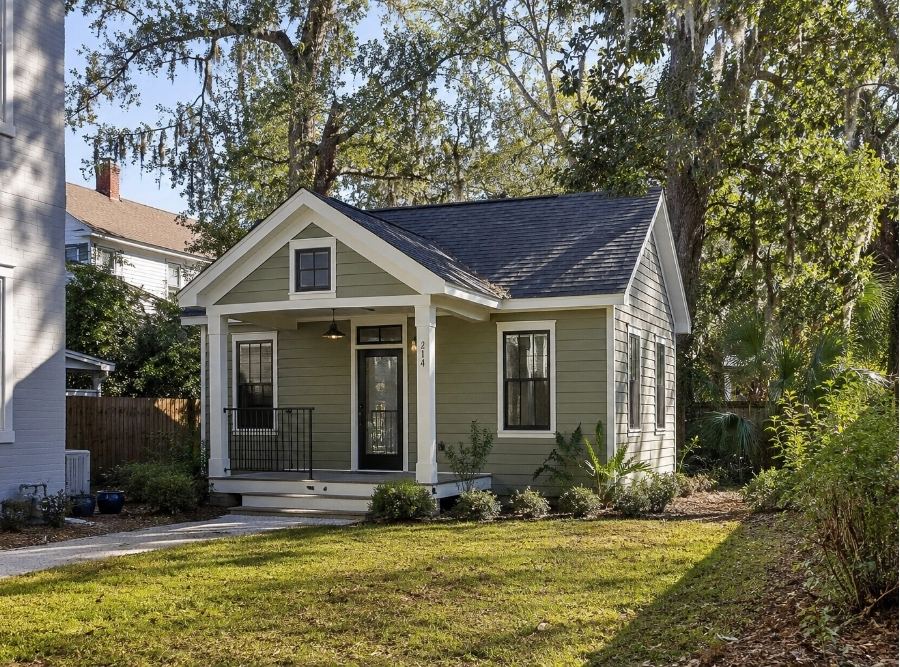
Can I Use an ADU as an Airbnb or Short-Term Rental in Savannah, GA?
Quick Answer:
Possibly, but a legal ADU in Savannah is not automatically legal for Airbnb or short-term rental use. Whether a carriage house, garage apartment, or backyard guest cottage can operate as a short-term vacation rental often depends on zoning, STVR overlay eligibility, owner-occupancy rules, parking, and whether the property qualifies for a city-issued STVR certificate.
Savannah’s short-term rental rules can vary significantly depending on the property location, overlay district, and permit availability, so homeowners should always verify current regulations directly with the City of Savannah before designing around projected Airbnb income.
Last verified: May 2026. Because Savannah’s STVR regulations and overlay rules can change, homeowners should confirm current requirements directly through the City of Savannah’s STVR portal and Development Services Department before beginning construction or conversion planning.
Key Takeaways
- A legal ADU is not automatically approved for Airbnb or STVR use in Savannah
- Short-term rental eligibility often depends on zoning overlays and permit availability
- Historic districts may face additional regulations and operational restrictions
- Active Airbnb use creates far more humidity, wear, and maintenance exposure than family guest use
- The best ADUs are typically designed around long-term flexibility rather than nightly rental optimization
- Privacy, parking, and circulation patterns matter significantly in luxury neighborhoods
Many Savannah homeowners begin thinking about an ADU as family space first. A carriage house for guests. A garage apartment for visiting children. A detached cottage for aging parents.
Then somewhere during the planning process, the conversation shifts.
The structure starts looking like it could offset costs when family is not visiting. A realtor mentions “rental potential.” A property manager projects weekend rates. The guest suite suddenly becomes part hospitality space, part investment strategy, and part long-term family flexibility plan.
That is usually when confusion begins.
One of the most common misunderstandings surrounding ADUs in Savannah is the belief that permitting the structure and legally renting the structure are essentially the same thing. They are not. An accessory dwelling unit may be completely legal to build while still being prohibited from operating as a short-term vacation rental under Savannah’s STVR regulations.
In practice, the city evaluates those as two separate questions involving two separate layers of review.
For many homeowners, that realization comes surprisingly late in the process. The carriage house may already be designed. The finishes may already be selected. The detached garage may already be halfway through conversion. Then the zoning map, overlay district rules, or STVR certificate limitations begin reshaping the conversation in ways the homeowner never anticipated.
In Savannah, Location Often Matters More Than the ADU Itself
Homeowners frequently assume the city’s primary concern is the structure. In reality, Savannah’s short-term rental rules are heavily tied to where the property sits and how the property is classified within the city’s zoning and overlay system. A beautifully designed carriage house may still be ineligible for Airbnb use simply because the parcel falls outside the permitted STVR overlay district.
Another property may technically qualify but still encounter limitations tied to owner occupancy, parking configuration, ward permit caps, historic district requirements, and certificate availability. Many homeowners become frustrated because nearby properties appear to operate as Airbnbs while their own parcel faces restrictions.
Properties commonly face review involving STVR overlay eligibility, owner-occupied vs. non-owner-occupied classification, ward or district permit caps, parking configuration requirements, historic district restrictions, and existing certificate availability.
What is often invisible from the street is that Savannah’s STVR framework can vary dramatically from one block or district to another. This becomes particularly nuanced in neighborhoods such as the Savannah Historic District, Thomas Square, and the Victorian District. These areas often have the highest short-term rental demand, but also the most layered regulations.
Some properties carry grandfathered status from earlier approval periods. A neighbor operating a legal carriage-house rental does not necessarily mean the property next door can obtain the same approval today. That distinction matters because many homeowners begin designing the ADU around projected rental income before fully confirming whether short-term rental operation is actually available to them.
Airbnb-Style ADUs Behave Very Differently Than Family Guest Cottages
A guest suite used occasionally by family behaves very differently than an Airbnb occupied by rotating visitors throughout Savannah’s humid coastal seasons. That difference is often underestimated early in the design process. Family members typically use a space gently and predictably. Short-term guests do not.
Wet luggage rolls across thresholds after summer storms. Exterior stairs stay damp after repeated turnover cycles. Thermostats are adjusted aggressively during July humidity. Doors remain open during unloading. Guests arriving from Tybee, the marina, or the golf course bring sand, sunscreen, wet towels, and heavy foot traffic into the structure continuously.
This is why many ADUs that feel perfectly adequate for occasional family use begin struggling once they operate as active rentals. Owners often begin noticing musty odors, cupping flooring near entries, swollen trim around bathrooms and kitchenettes, accelerated hardware corrosion, inconsistent humidity control, and HVAC strain during vacancy periods.
In Savannah’s climate, detached ADUs are particularly vulnerable because they experience more environmental exposure and more inconsistent occupancy than primary homes. Small carriage houses and garage apartments often remain vacant between guest stays, allowing humidity to rise rapidly during warm months. Owners may lower HVAC settings remotely to save energy, unintentionally creating moisture swings that damage finishes over time.
Compared to family-use guest spaces, active Airbnb-style ADUs typically experience higher humidity exposure, increased flooring and threshold wear, more aggressive HVAC usage, faster exterior hardware corrosion, increased bathroom and kitchenette moisture, and more frequent cleaning and maintenance cycles. What initially appears to be a housekeeping issue is often a building-performance issue unfolding underneath the finishes.
For homeowners exploring detached guest spaces, Baywater also shares guidance on carriage house construction in Savannah, garage apartment conversions, coastal humidity-resistant building strategies, and ADU planning in historic Savannah neighborhoods.
Luxury Neighborhoods Introduce Privacy and Lifestyle Tradeoffs
Short-term rental conversations become more delicate in Savannah’s higher-end residential communities because homeowners are balancing income potential against privacy, neighborhood character, and long-term property quality.
In areas such as:
- Isle of Hope
- The Landings
- Dutch Island
- Wilmington Island
- Savannah Quarters
outdoor living becomes central to how families actually use their homes.
Courtyards, pool terraces, screened porches, marsh-facing patios, and garden paths are designed around privacy and quiet circulation.
Once a detached ADU begins operating as a short-term rental, those same circulation patterns can suddenly feel very different.
Common Lifestyle Changes Homeowners Notice
- Guests arriving late with rolling luggage
- Exterior lighting remaining active overnight
- Increased vehicle movement near private outdoor spaces
- Backyard areas feeling less secluded
- Pool and courtyard spaces feeling more public
This is where many homeowners begin realizing that the emotional impact of short-term rental use matters just as much as the legal approval itself.
A carriage house may technically qualify for Airbnb use while still slowly changing how the property feels to live in.
One of the clearest differences between thoughtfully integrated luxury ADUs and lower-quality rental conversions is that the best projects preserve the dignity and rhythm of the larger property.
Guest circulation feels intentional. Owner storage remains protected. Parking works naturally in real life rather than only on paper. Outdoor lighting guides arrivals without making the home feel commercial.
Historic Carriage Houses Often Photograph Better Than They Perform
Savannah’s historic carriage houses are incredibly appealing from a short-term rental perspective. Brick lanes, tabby walls, mature live oaks, and old courtyard relationships create the kind of visual atmosphere guests actively search for online. Unfortunately, historic charm and long-term building performance are not always the same thing.
Many older carriage houses and detached garage apartments throughout Savannah were never designed for modern hospitality expectations. Older structures may struggle with humidity control, insulation performance, sound separation, weather protection, condensation around historic windows, slick exterior stairs after rain, and sound transfer between structures.
This becomes especially noticeable in short-term rental environments because guests evaluate the experience very differently than homeowners do. Family members tolerate quirks because the space feels personal and familiar. Paying guests do not.
Historic ADUs often require upgrades such as humidity management improvements, better insulation and HVAC balancing, sound separation enhancements, durable flooring and moisture-resistant trim, safer exterior stairs and drainage, and higher-performance doors, windows, and hardware. A musty smell, noisy mini-split, rusting lockset, or humid bathroom immediately becomes part of the review experience.
What initially looked timeless during the design phase can begin requiring constant maintenance once operational reality takes over.
The Most Successful ADUs Usually Preserve Flexibility First
The strongest ADU projects in Savannah are often the ones designed around long-term flexibility rather than maximum short-term rental income.
That may sound counterintuitive initially, but Savannah’s regulations, coastal climate, and evolving STVR landscape make flexibility incredibly valuable over time.
An accessory dwelling that functions beautifully for:
- family use
- multigenerational living
- long-term guests
- future caregiving
- occasional extended stays
tends to preserve far more long-term resilience than a space designed exclusively around nightly rental optimization.
This is particularly important because Savannah’s STVR rules, overlay limitations, permit caps, and enforcement environment can shift over time.
A property marketed aggressively around Airbnb income today may face entirely different operational realities years later.
The best ADUs are rarely the ones that feel most commercial.
They are the ones that still feel deeply connected to the architecture, privacy, and long-term lifestyle of the property itself.
In Savannah’s older neighborhoods and coastal communities, the most successful carriage houses and guest cottages tend to function as enduring extensions of the home first, with rental flexibility considered carefully and realistically within that larger context.
Frequently Asked Questions About Savannah ADUs and Airbnb Use
Can I legally Airbnb my ADU in Savannah?
Possibly. A legal ADU is not automatically approved for Airbnb or STVR use. Eligibility often depends on zoning, overlay districts, owner-occupancy classification, permit availability, parking requirements, and whether the property qualifies for a city-issued STVR certificate.
Are Airbnb rules different in Savannah’s Historic District?
Yes. Historic areas often have additional overlay rules, permit limitations, preservation considerations, and operational restrictions that may affect short-term rental eligibility. Some properties may also carry grandfathered approvals that newer applicants cannot obtain today.
Can I convert my garage apartment into a short-term rental?
Sometimes. Garage apartments may qualify if the property meets Savannah’s STVR requirements, zoning standards, occupancy rules, and operational regulations. Approval depends heavily on the parcel location and current city permitting availability.
Do Savannah STVR rules change often?
They can. Savannah’s short-term rental regulations, overlay districts, permit caps, and enforcement practices may evolve over time as the city adjusts neighborhood protections and tourism management strategies. Homeowners should always verify current regulations directly with the City of Savannah before purchasing, designing, or marketing an ADU for Airbnb use.
Is a family guest cottage easier to maintain than an Airbnb ADU?
Usually yes. Family-use spaces typically create less wear, moisture exposure, HVAC strain, cleaning frequency, and operational turnover than active short-term rentals. Detached Airbnb-oriented ADUs often require more durable finishes, stronger humidity control strategies, and ongoing maintenance planning.
Planning an ADU in Savannah?
Baywater Custom Builders works with homeowners throughout Savannah, Isle of Hope, Wilmington Island, Skidaway Island, and surrounding Lowcountry communities to create ADUs, carriage houses, and guest spaces thoughtfully designed around long-term durability, architectural cohesion, coastal performance, and realistic lifestyle use.
Whether your goal is multigenerational living, guest accommodations, occasional rental income, or preserving long-term property value, thoughtful planning upfront matters far more than simply maximizing nightly rental potential.
The strongest ADU projects are the ones that continue working beautifully for the property, the homeowner, and the surrounding neighborhood for years to come.