
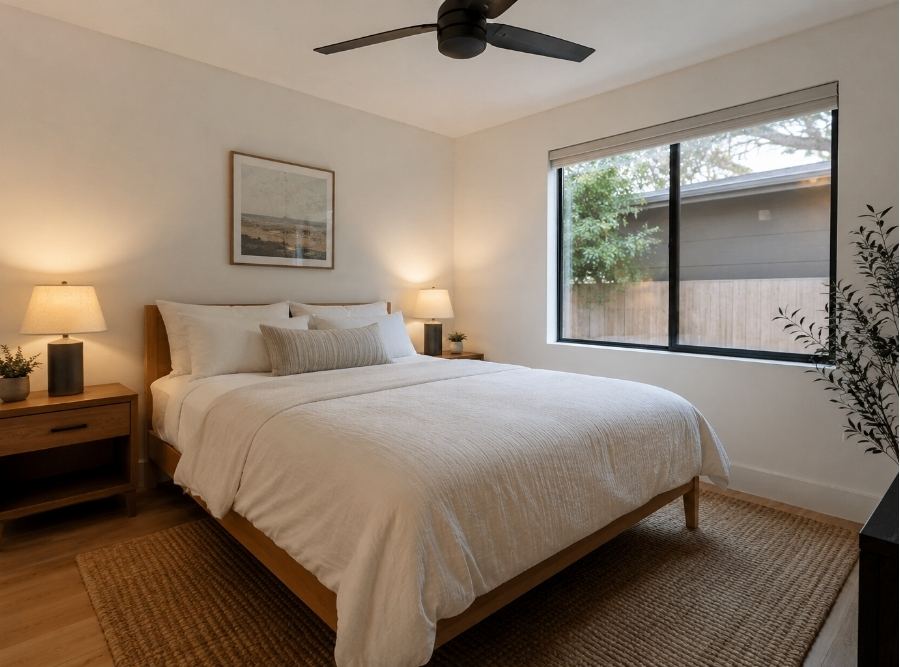
How Many Bedrooms Can an ADU Have in Savannah, GA?
Quick Answer:
Most Savannah ADUs typically accommodate 1–2 bedrooms within an approximately 800–1,000 square foot footprint, with one-bedroom layouts often performing better long-term in Savannah’s coastal climate and common zoning constraints.
While Savannah’s ADU regulations are usually controlled more by size, lot coverage, setbacks, and accessory scale than by a strict bedroom cap, many two-bedroom layouts begin feeling compressed once storage, HVAC systems, circulation, and humidity management are realistically incorporated into the design.
Savannah planning guidance has historically referenced accessory dwelling units containing no more than one bedroom in certain zoning scenarios, while broader footprint allowances may apply depending on district and ordinance revisions.
Last verified: May 2026. Savannah’s ADU standards, overlay regulations, and zoning interpretations can evolve over time. Homeowners should confirm current requirements directly with Savannah’s Development Services Department and NewZO planning resources before beginning design work.
Why Bedroom Count Becomes More Complicated Than Homeowners Expect
Savannah homeowners often begin the ADU process assuming the city ordinance will provide a simple answer about bedroom count. In reality, the conversation quickly expands into much larger questions involving privacy, circulation, ceiling heights, humidity control, parking expectations, and overall architectural balance.
For many properties throughout Ardsley Park, Isle of Hope, Wilmington Island, The Landings, and the Savannah Historic District, the real challenge is not whether two bedrooms can technically fit inside the structure. The challenge is whether the ADU still feels comfortable, functional, and architecturally balanced once they do.
Bedroom Count Is Usually Limited by Footprint, Not Ordinance
In Savannah, bedroom count is often limited indirectly through:
- Overall ADU size
- Lot coverage restrictions
- Setbacks
- Accessory scale requirements
- Overlay district conditions
Savannah planning guidance has historically referenced accessory dwelling footprints around 40% of the principal residence size, with many detached units commonly falling within roughly 800–1,000 square feet depending on zoning district and lot conditions.
Once homeowners begin designing a true luxury-level guest cottage or carriage house, the available space disappears much faster than expected.
An ADU still needs kitchens, bathrooms, closets, laundry areas, HVAC equipment, storage, and comfortable circulation space. After those systems are honestly incorporated into the design, the second bedroom often becomes the element that changes how the entire structure feels.
The most common design pressures usually involve:
- Stair and circulation placement
- HVAC zoning requirements
- Closet and storage needs
- Ceiling-height limitations
- Humidity-management concerns
This is where many ADUs begin feeling overprogrammed.
The living room shrinks to make another sleeping room fit. Stair placement starts dominating the floor plan. Windows stop aligning naturally with the architecture.
Technically, the additional bedroom may fit.
Architecturally and emotionally, the structure may no longer feel balanced.
Two-Bedroom ADUs Behave Differently in Savannah’s Climate
Many Savannah ADUs can accommodate two bedrooms, especially on larger lots or within detached carriage-house designs. However, a two-bedroom ADU often behaves very differently than a one-bedroom guest cottage once people begin using the space regularly.
Additional bedrooms create more humidity, greater HVAC demand, additional storage pressure, heavier circulation wear, and higher expectations for privacy and sound separation. In Savannah’s coastal climate, those pressures become especially noticeable inside detached accessory structures that already experience heavier environmental exposure and intermittent occupancy patterns.
Mini-split systems that cool an open one-bedroom layout effectively may struggle once multiple enclosed sleeping rooms are added. Closed bedrooms and closets tend to trap stale air more quickly during humid months, while loft sleeping areas frequently become hotter during summer afternoons because the roof assembly absorbs significant coastal heat throughout the day.
Homeowners often assume these are decorating or comfort issues when they are actually signs that the floor plan itself may be pushing beyond what the footprint comfortably supports.
One-Bedroom vs. Two-Bedroom Savannah ADUs
| Feature | One-Bedroom ADU | Two-Bedroom ADU |
|---|---|---|
| Footprint Efficiency | More open and flexible | More compressed layout |
| HVAC & Humidity Performance | Easier to balance | Higher strain on systems |
| Storage Capacity | Better long-term usability | Often reduced |
| Architectural Balance | Cleaner proportions | Can create bulkier massing |
| Multigenerational Flexibility | Strong for guests and family | Higher occupancy potential |
| Long-Term Comfort | Often better | Depends heavily on layout quality |
One of the more difficult conversations in luxury ADU design is helping homeowners understand that more bedrooms do not automatically create a better structure. In many Savannah accessory dwellings, one generous bedroom suite ultimately performs better over time than two undersized sleeping rooms squeezed into a limited footprint.
A thoughtfully designed one-bedroom ADU can still comfortably support aging parents, adult children, caregivers, visiting grandchildren, seasonal guests, and future resale flexibility while preserving stronger natural light, healthier airflow, better storage, improved circulation, and more effective humidity management.
That distinction matters especially in neighborhoods such as The Landings, Dutch Island, Isle of Hope, and Savannah Quarters, where homeowners expect accessory structures to maintain the same architectural dignity as the primary residence rather than feeling compressed, temporary, or overly optimized for occupancy alone.
Historic Districts Add Another Layer of Design Pressure
Historic and preservation-conscious neighborhoods throughout Savannah often apply additional scrutiny involving:
- Scale and massing
- Rooflines and dormers
- Rear-lane visibility
- Window alignment
- Architectural compatibility
A second-story addition designed primarily to squeeze in another bedroom may technically satisfy zoning while still creating architectural problems that affect the overall character of the property.
This becomes especially important in areas where accessory structures remain highly visible from courtyards, neighboring lots, rear lanes, and garden spaces.
Because Savannah’s ADU regulations are governed primarily through the city’s NewZO zoning ordinance, overlay districts, and accessory structure standards, requirements can vary significantly depending on neighborhood and lot conditions.
Homeowners should always verify current requirements directly with Savannah’s Development Services Department before beginning design work.
Flex Rooms and Loft Spaces Create More Complexity Than Expected
Lofts, offices, and flex rooms often create more questions than homeowners initially expect.
Many Savannah ADU projects attempt to increase sleeping capacity indirectly by designing bonus rooms, lofts, offices, or flex spaces that may eventually function as bedrooms even if the plans label them differently.
The challenge is that sleeping spaces still create real comfort and code considerations involving:
- Egress windows
- Ceiling heights
- Ventilation
- Emergency escape access
- Airflow and humidity control
- Sound separation
A loft may look charming online while feeling hot and uncomfortable during Savannah summers.
Similarly, a small office may technically hold a bed while lacking the ventilation or privacy needed for long-term occupancy.
Once grandchildren, caregivers, or adult family members begin using the space regularly, the label on the floor plan matters far less than how the room actually performs in everyday life.
Frequently Asked Questions About Savannah ADUs
Can a Savannah ADU have 3 bedrooms?
In some situations, larger ADUs may technically accommodate three bedrooms, but this becomes increasingly difficult within common Savannah accessory structure size limitations. Three-bedroom layouts often create major circulation, HVAC, parking, storage, and architectural balance challenges that can make the structure feel compressed rather than comfortable.
What is the typical ADU size in Savannah?
Many Savannah ADUs fall within roughly 800–1,000 square feet depending on zoning district, overlay standards, lot conditions, and the size of the primary residence. Some zoning districts apply footprint limits tied to the principal dwelling size.
Do lofts count as bedrooms?
Not always officially, but lofts used for sleeping still create ventilation, egress, circulation, ceiling height, and comfort considerations similar to traditional bedrooms. In Savannah’s humid climate, loft sleeping areas can also become significantly warmer during summer months if HVAC and roof assemblies are not carefully designed.
Are garage apartments treated differently than detached ADUs?
Sometimes. Garage apartment conversions may face additional limitations involving ceiling height, insulation depth, stair placement, structural framing, ventilation, and HVAC distribution. Older garage structures may also require substantial upgrades before functioning comfortably as long-term living space.
Are ADU rules different in Savannah Historic Districts?
Yes. Historic neighborhoods and preservation overlays often introduce additional review involving rooflines, windows, dormers, visibility, building massing, and architectural compatibility with surrounding properties.
The Best Savannah ADUs Usually Feel Intentional, Not Maximized
The strongest accessory dwellings in Savannah are rarely the ones that simply achieve the highest sleeping count possible. They are the ones that feel dry, proportionate, architecturally integrated, naturally lit, and comfortable over time.
In many cases, homeowners initially pursuing two-bedroom layouts ultimately discover that a thoughtfully designed one-bedroom suite with better storage, stronger natural light, proper HVAC zoning, durable coastal detailing, and meaningful indoor-outdoor connection feels substantially more luxurious than a compressed two-bedroom plan attempting to maximize occupancy inside a limited footprint.
The goal is not simply fitting more beds into an accessory structure. The goal is creating an ADU that performs properly in Savannah’s climate, supports evolving family needs, and still feels timeless years after construction ends.
Building an ADU That Works Long-Term
Baywater Custom Builders works with homeowners throughout Savannah, Isle of Hope, Wilmington Island, The Landings, and surrounding Lowcountry communities to create thoughtfully designed ADUs, carriage houses, and guest cottages carefully balanced around long-term livability, architectural cohesion, coastal durability, humidity-resistant detailing, and realistic family use.
Whether the goal is multigenerational living, guest accommodations, caregiver housing, or long-term property flexibility, the best ADUs begin with realistic planning — not simply maximizing room count on paper.