
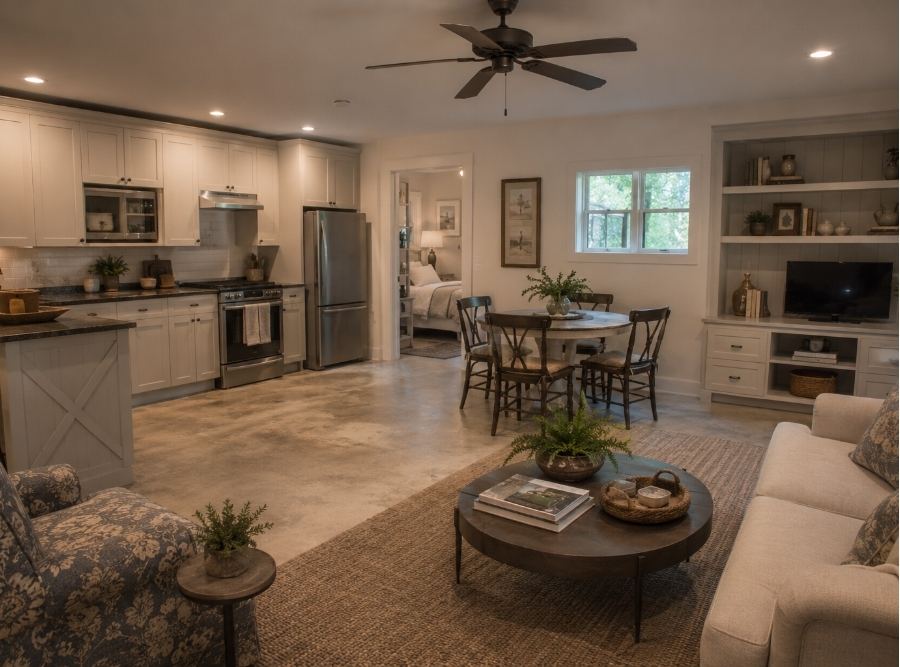
Can I Turn My Garage Into an Apartment in Savannah, GA?
Quick Answer:
Yes, you can turn a garage into an apartment in Savannah, GA, but most projects require zoning approval, building permits, and substantial code-compliant upgrades before the space can legally function as living space.
Once a garage conversion includes features like a kitchen, bathroom, sleeping area, or independent occupancy, the project often falls under accessory dwelling unit (ADU) review especially in historic districts, flood-prone areas, and neighborhoods with architectural oversight. Savannah also requires converted spaces to meet current residential building-code standards for habitable space, including proper insulation, ventilation, egress, plumbing, and electrical compliance.
Last verified: May 2026. Savannah zoning requirements, ADU regulations, and historic-review standards can evolve over time, so homeowners should always confirm current requirements directly with Savannah’s Development Services Department before beginning design work.
Why Garage Apartments Often Become More Complex Than Homeowners Expect
At first glance, converting a garage into an apartment can seem straightforward.
The structure already exists. The roof is in place. The square footage feels usable the moment someone steps inside.
Many homeowners throughout Savannah initially describe the project as simply “finishing out the garage” before realizing how differently a garage behaves once it becomes conditioned living space.
The room may feel damp after heavy rain. The slab stays cool and clammy during summer humidity. An old detached garage or carriage house starts developing a musty smell after sitting closed for a few weeks.
What looked like extra usable space starts revealing all the reasons garages were never originally designed for full-time occupancy.
In Savannah, successful garage apartment conversions usually involve far more than adding drywall, cabinetry, flooring, and a bathroom. The moment a garage begins functioning as independent living space, the project typically enters a much more complex category involving zoning, drainage, moisture management, utilities, fire separation, and long-term livability.
That becomes especially important in neighborhoods like Ardsley Park, Isle of Hope, Wilmington Island, The Landings, and Savannah’s Historic District, where preservation standards, flood conditions, and architectural compatibility often shape how accessory living spaces are evaluated.
Many Garage Apartments Develop Problems Long Before Homeowners Notice Them
One of the biggest misconceptions surrounding garage conversions is the idea that problems only exist once visible damage appears.
In Savannah’s coastal climate, garage apartments often struggle quietly for years before homeowners fully understand what is happening behind the finishes.
The apartment may look beautiful on the surface while moisture slowly works upward through the slab, collects behind trim, or lingers inside poorly sealed wall cavities. Over time, subtle warning signs begin appearing: bubbling paint near the floor, swollen baseboards after storms, or air conditioning systems that seem to run constantly without ever making the room feel truly dry.
Some of the most common early warning signs include:
- Persistent musty odors
- Damp-feeling flooring during humid weather
- Condensation around windows and doors
- Bubbling paint near baseboards
- HVAC systems running constantly
- Trim swelling after heavy rain or humidity
Many homeowners initially dismiss these as cosmetic annoyances rather than indications that the structure itself was never properly prepared for residential occupancy.
A garage was originally designed for vehicles, storage, and utility use — not humidity-controlled living conditions in a coastal environment like Savannah.
The slab may lack vapor protection. Exterior walls may contain minimal insulation. The old garage-door opening may never have been rebuilt as a true weather-resistant wall assembly.
In many Savannah garage apartments, problems begin quietly long before they become visible.
The Most Difficult Part of the Project Usually Is Not the Finishes
Homeowners often start garage apartment projects focused on the exciting parts of the renovation: flooring, lighting, bathrooms, cabinetry, and kitchenettes.
But the deeper challenges usually emerge beneath the finishes.
Once construction begins, the existing structure often reveals issues involving slab moisture, drainage, framing, electrical capacity, plumbing access, and code compliance. In Savannah, experienced builders frequently find that garage apartments become significantly more complex once the structure is honestly evaluated for long-term residential use.
Common issues uncovered during garage apartment conversions include:
- Slab moisture transmission
- Improper drainage or floor slope
- Electrical-capacity limitations
- Sewer and plumbing access complications
- Hidden termite or framing damage
- Fire-separation deficiencies
- Egress and code-compliance issues
For many homeowners, this is the moment the project stops feeling like a cosmetic conversion and starts feeling like a true residential construction project.
That shift is important because there is a major difference between a utility structure and a comfortable, durable living space designed to perform well over time.
Garage conversions also tend to expose awkward architectural conditions that are easy to overlook initially. Exterior stairs may feel temporary rather than integrated. The transition from driveway to apartment can appear abrupt. Old garage-door openings sometimes visually read like patched-over voids if the proportions and materials are not handled carefully.
In Savannah’s higher-end neighborhoods, homeowners rarely want an apartment that simply functions. They want it to feel cohesive, intentional, and naturally connected to the architecture of the property itself.
Savannah’s Climate Changes How Garage Apartments Need to Be Built
A garage conversion that might function adequately in a drier inland climate can struggle significantly in Savannah’s coastal environment.
Humidity, salt exposure, marsh moisture, and intense rain events place constant pressure on detached structures and low slab elevations throughout the Lowcountry. This becomes especially true in older neighborhoods where many garages were built decades before modern moisture-management standards existed.
A detached garage near Isle of Hope, Wilmington Island, or Skidaway Island may sit lower than the surrounding yard because years of grading changes slowly altered how water moves around the structure.
During coastal storms, runoff can gradually push toward the slab edge while humid air enters through vulnerable framing transitions and older openings.
One of the most common mistakes homeowners make is assuming cooling and dehumidification are the same thing.
In reality, many garage apartments technically cool down while still never feeling fully dry. Undersized HVAC systems may lower the temperature while failing to properly manage humidity inside the structure.
The best-performing garage apartments are usually designed around long-term moisture control from the very beginning. That often includes:
- Slab moisture testing
- Drainage correction
- Proper flashing assemblies
- Air-sealing strategies
- Coastal-rated exterior materials
- Dedicated humidity management
- Durable exterior detailing
In Savannah, those decisions often matter far more long term than the visible finishes themselves.
Historic and Luxury Neighborhoods Add Another Layer of Complexity
In Savannah’s preservation-sensitive neighborhoods, garage apartment projects often involve far more than interior renovation alone.
Detached garages, carriage houses, and accessory buildings still contribute to the larger architectural composition of the property and surrounding streetscape. Because of that, many conversions may require additional architectural review even when the work feels secondary to the main residence.
Savannah’s preservation culture places significant importance on rooflines, exterior materials, trim depth, window proportions, and overall architectural continuity.
A converted garage that visibly reads like a modified utility structure may struggle during review even if the apartment itself functions well internally.
Some of the most common design-review concerns include:
- Roofline compatibility
- Window proportions and placement
- Exterior material continuity
- Stair integration and circulation
- Drainage visibility
- Overall architectural cohesion
That level of scrutiny becomes even more important in luxury communities such as The Landings, Dutch Island, and Savannah Quarters, where homeowners expect detached apartments and carriage suites to feel architecturally integrated rather than improvised.
The most successful projects rarely announce themselves as conversions.
The roof rhythm aligns naturally with the main home. Outdoor circulation feels intentional. Drainage disappears quietly into the landscape. The apartment simply feels like it always belonged there.
The Best Garage Apartment Projects Usually Begin With Honest Feasibility
The Savannah garage apartment projects that perform best long term are rarely the ones rushed into construction.
They are usually the projects where the structure, site conditions, zoning, and long-term family goals were evaluated honestly before design decisions became emotionally fixed.
Strong feasibility planning often includes:
- Zoning and ADU verification
- Floodplain analysis
- Structural and framing inspection
- Electrical-capacity review
- Utility and sewer planning
- Moisture and drainage evaluation
Homeowners are frequently surprised to discover that the largest cost drivers are not the visible finishes. The biggest investments often involve correcting hidden structural, environmental, and utility issues that determine whether the apartment will actually perform comfortably over time.
That becomes especially important for second-home owners and families coordinating projects remotely.
Garage apartments throughout Savannah are increasingly being designed for aging parents, adult children, caregivers, extended family stays, golf weekends, and long-term multigenerational flexibility.
A successful garage apartment should not merely look complete on the day construction ends.
It should feel dry in August, remain comfortable during heavy rain, perform quietly at night, and resist coastal moisture for years to come.
In Savannah’s older and architecturally sensitive neighborhoods, the best garage apartment conversions rarely feel like conversions at all.
They feel like spaces that were always meant to belong there.
Frequently Asked Questions About Garage Apartment Conversions in Savannah
Do I need a permit to convert my garage into an apartment in Savannah?
Yes. Most garage apartment conversions involving kitchens, bathrooms, sleeping areas, plumbing, or independent occupancy require permits, inspections, and zoning review. Savannah permit guidance also notes that conversions must meet residential code standards for habitable space.
Is a garage apartment considered an ADU in Savannah?
Often, yes. Once the space functions as independent living quarters, the city may evaluate it as an accessory dwelling unit depending on the property layout, zoning district, and intended occupancy.
Can I convert a detached garage into living space?
Possibly. Detached garages can often be converted, but the structure may require upgrades involving utilities, insulation, fire separation, moisture control, drainage, and overall code compliance before functioning as legal habitable space.
Why do garage apartments feel damp in Savannah?
Many garages were never designed for conditioned residential occupancy. Slab moisture, poor air sealing, inadequate dehumidification, and Savannah’s coastal humidity frequently contribute to dampness and musty odors over time.
Are garage apartment conversions harder in historic neighborhoods?
In many cases, yes. Historic districts and preservation-sensitive neighborhoods may apply additional review involving rooflines, windows, materials, massing, and architectural compatibility with surrounding structures.
Building Garage Apartments That Perform Long-Term
Baywater Custom Builders works with homeowners throughout Savannah, Isle of Hope, Wilmington Island, The Landings, and surrounding Lowcountry communities to create garage apartments, carriage houses, and accessory living spaces designed around long-term durability, architectural cohesion, coastal moisture resistance, and realistic family use.
Whether the goal is multigenerational living, guest accommodations, caregiver housing, or long-term property flexibility, the strongest garage apartment projects begin with honest feasibility, thoughtful design integration, and careful attention to how the structure will actually perform in Savannah’s coastal environment for years to come.