
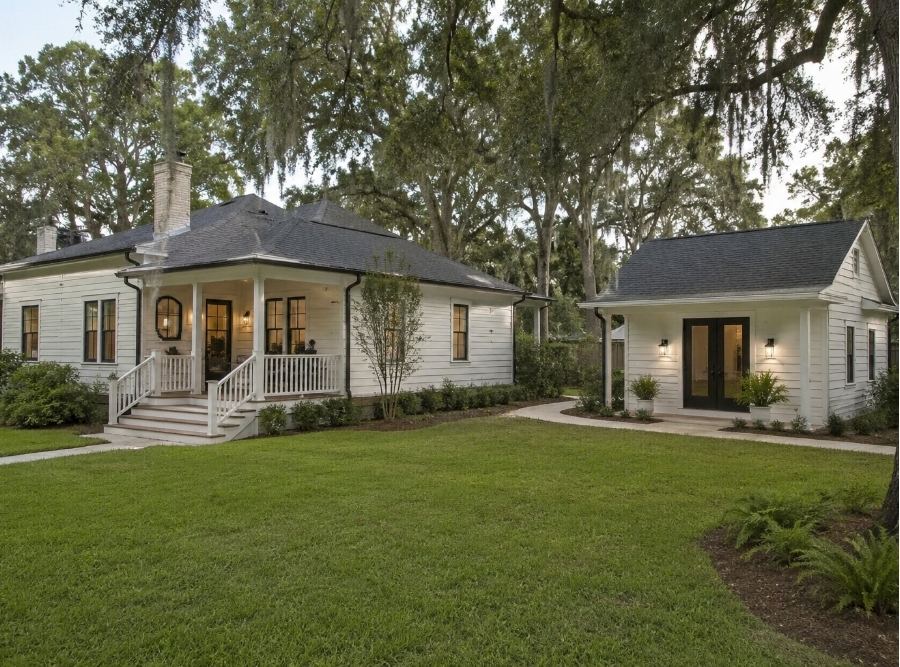
Do ADUs Need to Match the Main House in Savannah, GA?
Quick Answer:
Usually yes, but “match” does not typically mean the ADU must be an exact copy of the main house.
In Savannah, accessory dwelling units generally need to feel architecturally compatible, appropriately scaled, and visually connected to the primary residence and surrounding neighborhood, especially in historic districts, conservation overlays, or HOA-controlled communities. Savannah ADU guidance has referenced similar architectural style relationships between the accessory dwelling and the principal dwelling, with overlay district standards applying when relevant.
Last verified: May 2026. Savannah’s zoning and overlay standards can evolve over time, so homeowners should confirm current requirements through the City of Savannah Planning and Urban Design Department, NewZO regulations, and applicable historic review boards before finalizing ADU plans.
Why “Matching” an ADU Is More Architectural Than Cosmetic
One of the biggest misconceptions surrounding ADUs in Savannah is the belief that compatibility simply means using the same paint color, siding, roof color, or window trim.
Homeowners often assume that if the guest cottage shares a few exterior finishes with the main home, the project will naturally feel cohesive.
In reality, the relationship between a Savannah ADU and the primary residence is much more architectural than cosmetic.
That distinction becomes especially important in places like:
- Savannah Historic District
- Isle of Hope
- Ardsley Park
- The Landings
- Dutch Island
- Wilmington Island
- Savannah Quarters
In these neighborhoods, homeowners are not simply adding backyard structures. They are shaping how the entire property feels as a long-term estate, family compound, or legacy residence.
A detached carriage house may technically pass permitting while still feeling visually disconnected from the property itself.
The roofline may sit awkwardly against the main home. The windows may feel too contemporary for the surrounding architecture. The trim may appear thin or underdeveloped. The building may technically “match” while still looking like it arrived from an entirely different project.
That is usually the real concern homeowners are feeling when they ask whether the ADU has to match the house.
Savannah Prioritizes Compatibility Over Exact Replication
One of the most important design concepts in Savannah ADU planning is understanding the difference between compatibility and imitation.
Savannah ADU guidance has referenced similar architectural style relationships between the ADU and the principal dwelling, particularly where overlay standards apply.
In practice, though, the strongest ADUs rarely succeed because they are literal miniature versions of the main home.
Instead, they succeed because they preserve the same architectural language.
Strong Savannah ADUs often share:
- Similar roof pitches and massing
- Coordinated window proportions
- Compatible siding exposure
- Related trim depth and detailing
- Consistent material quality
- Porch and courtyard relationships
- Aligned foundation heights
A well-designed carriage house may feel deeply connected to the main home even if the detailing is simplified and the materials are interpreted more quietly.
Many homeowners initially assume the safest approach is to duplicate every detail exactly. Ironically, that often creates a different problem.
Historic homes especially can become difficult to copy convincingly because the original craftsmanship, proportions, and aging patterns are extremely hard to reproduce authentically.
The result can feel forced rather than timeless.
That is why experienced Savannah architects and builders often focus less on copying ornament and more on preserving:
- Hierarchy
- Rhythm
- Proportion
- Visual continuity across the property
A smaller accessory structure should still feel subordinate to the principal residence — but subordinate does not mean under-designed.
The Biggest Failure Pattern Is an ADU That Still Feels Like a Garage
One of the most common problems in Savannah ADU projects is that the structure still visually reads like a garage, utility building, or converted storage space even after substantial renovation investment. This happens frequently with garage apartment conversions, detached garages, older carriage-house renovations, and backyard workshop conversions.
On paper, the materials may technically coordinate. In person, however, the building still feels temporary. Common design issues that create this effect include obvious garage-door infill, shallow roof pitches, undersized windows, weak trim detailing, mismatched siding profiles, poor window alignment, and oversimplified exterior materials during value engineering.
This becomes especially noticeable on luxury properties where outdoor living spaces are deeply integrated into daily life. In Savannah’s higher-end homes, the ADU is not emotionally hidden behind the property even if it sits physically behind the main house. The guest cottage becomes part of pool views, courtyard experiences, garden perspectives, screened porch sightlines, and lane-facing architecture.
Homeowners notice quickly when the structure feels visually weaker than the primary residence. Guests notice too. A detached cottage that looks builder-grade next to a beautifully detailed Lowcountry home can quietly undermine the feeling of the entire property, even if the interior finishes are expensive.
Historic Savannah Changes the Design Conversation
The conversation becomes much more nuanced inside Savannah’s historic and conservation areas because compatibility often moves beyond homeowner preference into formal review standards. Historic review boards frequently evaluate accessory structures based on roof forms and massing, window rhythm, visibility from lanes and courtyards, exterior materials, and architectural relationships to surrounding properties.
This surprises many homeowners because they assume rear-yard structures receive minimal scrutiny. In Savannah, lane-facing elevations and detached accessory buildings can still carry substantial architectural importance, particularly in the Historic District where carriage houses and lane homes have historically shaped the city’s urban fabric.
That does not necessarily mean modern design is prohibited. Savannah’s review environment can be more flexible than many homeowners initially assume, but contemporary ADUs generally need to remain contextually sensitive rather than aggressively disconnected from their surroundings.
What usually creates resistance is not modernity itself, but structures that feel abrupt, over-scaled, cheaply detailed, or visually disconnected from Savannah’s architectural character.
Coastal Conditions Make Exterior Compatibility a Durability Issue Too
In Savannah’s climate, the exterior conversation is not purely aesthetic. One of the most overlooked realities in coastal ADU construction is that poor architectural detailing often becomes a durability problem within just a few humid seasons.
Thin trim profiles trap moisture differently than the main house. Builder-grade doors swell during humid months. Cheap hardware corrodes faster in salt air. Simplified flashing details begin staining beneath windows.
Initially, the mismatch feels visual. Over time, it becomes physical.
Some of the most common long-term durability problems include:
- Hardware corrosion
- Siding movement
- Flashing stains
- Swollen exterior doors
- Uneven stair weathering
- Moisture intrusion around trim transitions
- Premature exterior aging
This is why the strongest Savannah ADUs are usually designed as permanent architecture rather than accessory afterthoughts.
Long-term durability often depends on details such as:
- Moisture-resistant trim assemblies
- Durable doors and hardware
- Coastal-rated roofing systems
- Proper drainage planning
- Carefully detailed material transitions
- Exterior materials that age consistently with the main home
A detached cottage that looks beautiful during the first year but deteriorates visibly faster than the primary residence will eventually feel disconnected no matter how closely the original design “matched.”
The Best ADUs Feel Related Without Feeling Forced
The most successful Savannah ADUs usually create a feeling homeowners struggle to describe initially but recognize immediately once it exists. The structure feels like it belongs.
Not copied. Not themed. Not overly “matchy.” Not pretending to be historic when it is clearly new construction. And not aggressively modern simply for contrast. Instead, the ADU feels naturally connected to the property’s larger architectural story.
That usually comes from thoughtful decisions involving roofline relationships, window placement, balanced proportions, compatible material aging, integrated landscaping, cohesive porch and courtyard connections, and a clear hierarchy between the main home and guest structure.
That balance matters particularly in Savannah because the city’s architectural culture tends to value restraint, continuity, timeless proportions, and long-term character far more than trend-driven design gestures.
The strongest ADUs are rarely the loudest ones. They are the ones that still feel timeless five, ten, and twenty years later.
Frequently Asked Questions About Savannah ADU Design
Does an ADU have to look exactly like the main house?
Usually no. In Savannah, accessory dwelling units are generally expected to feel architecturally compatible with the primary residence, but that does not mean they must be exact replicas. The strongest ADUs often reinterpret the architectural language of the main house through similar rooflines, proportions, materials, and detailing rather than copying every feature exactly.
Can a modern ADU work on a historic Savannah property?
Yes, in some cases. Contemporary ADUs can work successfully when the scale, proportions, massing, and material quality remain sensitive to the surrounding architectural context. Most review concerns arise when a structure feels visually abrupt, oversized, cheaply detailed, or disconnected from the historic fabric of the neighborhood.
Are ADUs reviewed differently in Savannah’s Historic District?
Yes. Historic and conservation areas may involve additional review related to visibility, roof forms, building massing, materials, window rhythm, and compatibility with surrounding structures. Rear-lane visibility and carriage-house relationships can also become important in Savannah’s historic neighborhoods.
What makes an ADU feel visually connected to the main home?
Roof pitch, siding exposure, window proportions, trim depth, porch detailing, foundation height, and material quality all contribute to architectural cohesion. Landscaping and outdoor circulation also play an important role in making the ADU feel integrated into the larger property.
Can a garage apartment be redesigned to match the house better?
Yes. Garage apartment conversions can often be dramatically improved through better window placement, stronger trim detailing, upgraded rooflines, porch additions, improved stair integration, and more thoughtful treatment of former garage-door openings.
Building an ADU That Belongs on the Property
Baywater Custom Builders works with homeowners throughout Savannah, Isle of Hope, Wilmington Island, The Landings, Dutch Island, and surrounding Lowcountry communities to create ADUs, carriage houses, and guest cottages designed around architectural cohesion, coastal durability, historic sensitivity, long-term estate-quality craftsmanship, and thoughtful integration with the main residence.
Whether the goal is a family guest cottage, detached garage apartment, multigenerational living space, or carefully integrated carriage house, thoughtful ADU design begins with understanding how the structure will relate to the property for decades, not just how it photographs during construction.
The strongest ADUs are not simply additions. They become part of the long-term architectural story of the home.